


Landslip on the A56 in Ramsbottom
For anyone who may be travelling across Greater Manchester and using the A56 in Ramsbottom.
Bury Council has introduced traffic management measures on the A56 in Ramsbottom, near Park Farm, as emergency works are carried out in response to an ongoing landslip affecting the road.
The landslip has caused a dangerous dip in the road surface, prompting the installation of temporary traffic signals to protect road users while remedial works take place. These signals will remain in place until minor surfacing and lining works can be completed.
Contractors have patched sections of the carriageway and lining will be carried out to mark out the new lanes. Once these works are complete, the road will return to two-way traffic within a narrowed carriageway layout designed to keep vehicles safely away from the affected area of the slip.
In addition to the immediate safety measures, the Council’s Traffic Team is preparing a Traffic Regulation Order (TRO) to reduce the speed limit from 40mph to 30mph along this stretch of the A56. This temporary reduction is intended to enhance safety for all road users while investigations continue, and long-term stabilisation solutions are developed. A long-term solution is likely to involve major engineering works to support the highway, the scale and scope of which will be determined by on-going ground investigation works into the cause of the slip. Lower speeds will help minimise risks and ensure that drivers can navigate the altered road layout safely.
Councillor Alan Quinn, Cabinet Member for the Environment and Climate Change, said: “These emergency measures are essential to ensure public safety while we address the impact of the landslip. We appreciate the patience and understanding of motorists and residents as we work to stabilise the area and keep the route open in the safest way possible.”
Questions and answers are available at the council’s website: https://www.bury.gov.uk/roads-travel-and-parking/highways-keep-bury-moving/road-works-and-closures/a56-ramsbottom-landslip-your-questions-answered

Lancashire Cricket Expo - This Weekend
by Wilf Dooley
This weekend, 21-22 February, Lancashire Cricket is delighted to announce the return of the Cricket Expo to Emirates Old Trafford.
A special, two day event, centred around the world of recreational cricket, The Cricket Expo will take place ahead of the start of the 2026 club cricket season, on Saturday 21 and Sunday 22 February 2026. The expo is aimed at capturing the imagination of the entire game and offering something for everyone across the weekend.
The whole of Emirates Old Trafford Cricket Ground will be dedicated to providing a platform of activities, informative workshops, and suppliers exhibiting the latest products and solutions to assist in the running of a Cricket Club.
Everyone interested in cricket from players and coaches, to ground staff, cricket enthusiasts and administrators, and any volunteers involved in day-to-day club life are welcome to attend this free event.
In addition to Cricket Clubs, the Expo will provide an opportunity for members of the Education sector to sample the innovative programmes we operate in schools and register an interest to be included in future schedules.
There is something available for everybody with the event covering all areas of cricket club life, giving new opportunities for clubs to run efficiently. This unmissable event is completely free of charge, This is a great opportunity to see inside one of Manchester's iconic sporting stadiums.
The Beep - don’t ignore it!
by Electrical Safety First
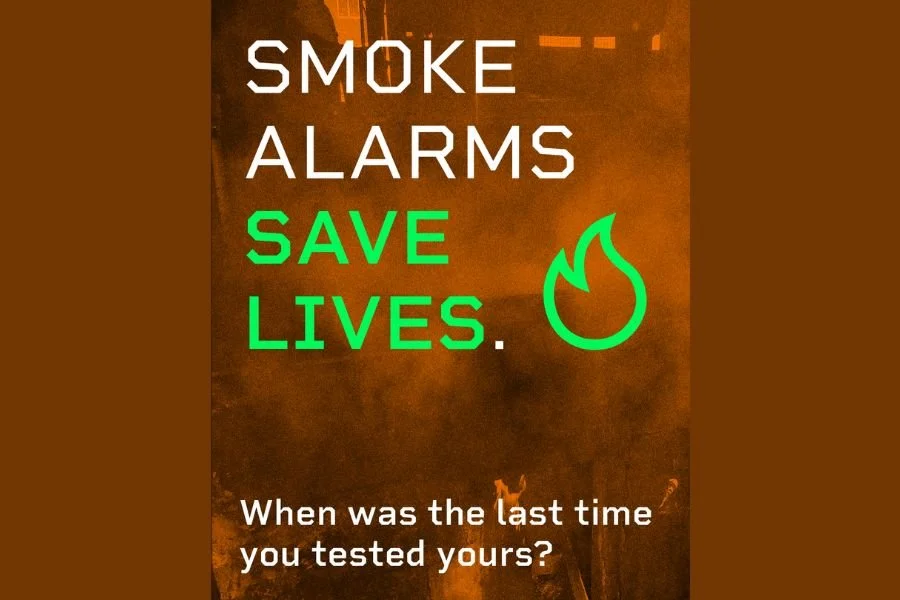
The beep you’ve been ignoring could save your life - test your smoke alarm today
We all recognise it. The faint chirp of a low-battery smoke alarm, just loud enough to spark a visceral reaction. You swear you’ll fix it tomorrow, but eventually you get used to it, absorbed into the house’s daily soundtrack.
Electrical Safety First is raising awareness that the small sound you’ve been ignoring is the very thing that could one day save your life.
Fire incidents across England have been quietly increasing over the past few years. In 2024/25 alone, Fire & Rescue services rushed to more than 142,000 fires, a 2.5% rise from the year before. Even more worrying, fire-related deaths have climbed too, now 12% higher than five years ago.
And the reason isn’t always faulty wiring or bad luck.
It’s silence.
According to government statistics, smoke alarms were absent in over a third of fire-related fatalities in the past year, and 43% of Britons admit to not checking their smoke alarms with the recommended frequency. Not because they don’t care, but because danger doesn’t feel real when everything looks normal.
But that tiny sound you keep meaning to fix? That’s your early warning system, your chance to wake up and walk away. Don’t ignore the beep!
Two simple fire safety habits to incorporate into your everyday routine
Fire safety doesn’t have to mean big changes or complicated rules. Some of the most effective protection comes from small habits that fit naturally into everyday life.
1. Start by practising fire drills at home: We do them at work, children practice them at school — yet they’re often overlooked at home. Making sure everyone knows how to get out, where to meet, and what not to do (such as hiding or going back for belongings) can make a real difference. Practising, especially with young children, helps build confidence, reduces panic, and lowers the risk of injury or death if a fire does break out.
2. Creating a nightly “close-down” routine: This could include turning off and unplugging unused appliances, checking that heaters and candles are off, closing internal doors, and making sure smoke alarms are working.
Check your batteries. Test your smoke alarms today
Everything comes down to the moment the fire is first detected. The materials, the room, the time of day, none of it matters as much as whether a smoke alarm sounds when it should.
So take action now!
Test every smoke alarm in your home today.
Check the batteries, and replace anything that’s not working.
A chirping smoke alarm isn’t background noise; it’s a warning.
If it beeps, don’t ignore it.

Men of Manchester Urged to Get Life-Saving AAA Screening at Manchester City FC
Men across Manchester aged 64 to 66 are being urged to take advantage of a free, potentially life-saving health check at a special Abdominal Aortic Aneurysm (AAA) screening event hosted at Manchester City FC’s Etihad Campus.
The event will take place on Thursday 26 February 2026, from 9:30am to 5pm, and is open to men aged 64 – 66 who have not previously been screened.
AAA is a serious condition that occurs when the main blood vessel in the abdomen becomes weakened. It often develops without any symptoms, meaning many men are unaware they have the condition until it becomes dangerous. A simple, painless screening can detect AAA early and significantly reduce the risk of life-threatening complications.
Incentives and additional support
To make the day even more appealing, men who attend the screening will be entered into a free prize draw, with the chance to win:
• A signed Manchester City FC shirt
• A stadium tour voucher
• Match tickets to the final game of the season
Alongside AAA screening, attendees will also be able to access:
• Free blood pressure checks
• A range of health services and community groups
• Support and advice from vascular specialists, who will be available throughout the day to answer questions
Complimentary tea and coffee will be available, helping to create a relaxed and welcoming environment.
For security reasons at the venue, attendees may bring one family member only if required on the day.
Booking information
Booking is essential, and places are limited. Men are strongly encouraged to secure their appointment as soon as possible by contacting the AAA Screening Team:
• Phone: 0161 291 5716
• Website: www.manchesterlco.org/aaa-screening
Event details
Venue: Manchester City FC, Etihad Campus, Manchester, M11 3FF
Date and time: Thursday 26 February 2026, 9:30am – 5pm